Daylight Saving Time, Explained
About 70 countries shift their clocks twice a year, on dates that don't line up between them. Here's where the practice came from, who still does it, and why the gap between regions causes more trouble than the hour itself.
What It Is
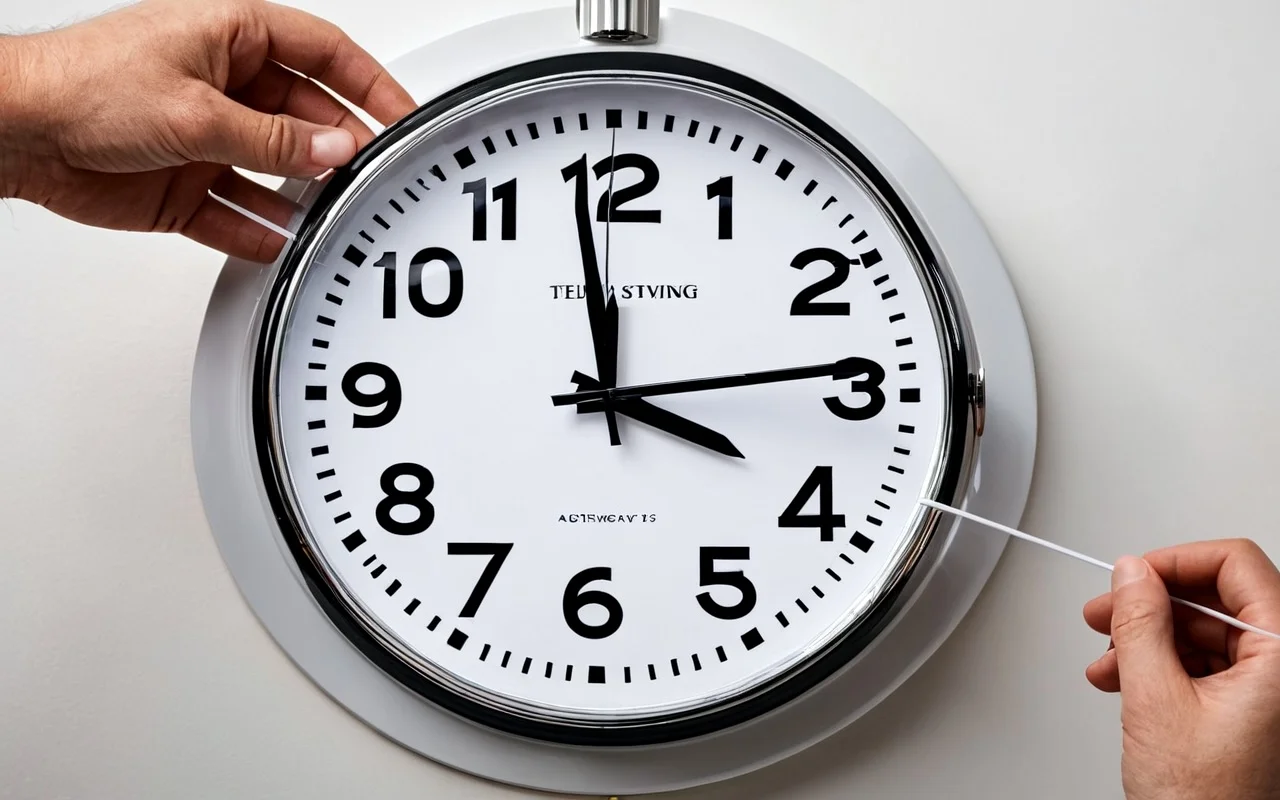
Daylight saving time moves an hour of daylight from the morning to the evening during the summer months. Clocks go forward in spring and back in autumn — "spring forward, fall back" — so that sunset happens an hour later by the clock than it otherwise would.
The mechanics are straightforward. The complications come from the fact that not everyone does it, and those who do don't switch on the same dates.
Where It Came From
Benjamin Franklin is usually credited, but the attribution is shaky. His 1784 letter to a Paris newspaper was satire, suggesting Parisians could save candles by getting up earlier; he never proposed changing clocks. The actual proposals came later — from the New Zealand entomologist George Hudson in 1895, who wanted more daylight for collecting insects after work, and the British builder William Willett in 1907.
It took a war to make it policy. Germany adopted daylight saving in 1916 to conserve coal, and other combatant nations followed within months. Most abandoned it once the war ended, then reintroduced it during the Second World War. In the United States the practice was left to states and cities until the Uniform Time Act of 1966 set national dates, while still allowing states to opt out entirely.
How the Switch Works
- Spring forward. In the US, clocks jump from 2:00 AM to 3:00 AM (the EU switches at 01:00 UTC everywhere at once). That day has 23 hours, and the 2 AM hour doesn't exist
- Fall back. Clocks go from 2:00 AM back to 1:00 AM. That day has 25 hours, and the 1 AM hour happens twice — which is why timestamps in that window are ambiguous without a UTC offset
Who Observes It
About 70 countries use daylight saving in 2026, most of them in Europe and North America. The dates differ by region:
| Region | DST Status | Starts | Ends |
|---|---|---|---|
| United States & Canada | Most areas; Hawaii, most of Arizona, Yukon and most of Saskatchewan stay on standard time all year | Second Sunday in March | First Sunday in November |
| European Union | All member states | Last Sunday in March | Last Sunday in October |
| Australia | Southern states only; Queensland, WA and NT do not | First Sunday in October | First Sunday in April |
| Most of Asia | Not observed | — | — |
| Most of Africa | Not observed | — | — |
| South America | Varies by country; several have abandoned it | Varies | Varies |
Because Australia is in the southern hemisphere, its summer clocks run opposite to Europe's — which is why the gap between Sydney and London swings by two hours over the year: 11 hours in January, 9 in July, and 10 for the few weeks in between when only one of them has switched.
The Case For
The arguments made in favour of daylight saving are mostly these:
- Energy saving, the original wartime rationale — less artificial light needed in the evening
- Evening daylight for retail, hospitality and outdoor recreation after working hours
- Road safety and crime, on the argument that more evening light during the busiest hours reduces both collisions and opportunistic crime
The Case Against
- The energy saving is marginal. Modern studies find the effect close to zero, and sometimes negative — evening air conditioning offsets the lighting saved
- The transition has health costs. Research has associated the spring switch with short-term increases in heart attacks, strokes and road accidents in the days immediately after, attributed to sleep disruption
- It shifts, rather than creates, daylight. The morning loses what the evening gains, which is why the practice has never suited people whose schedules are set by daylight rather than the clock — farming among them
- It complicates coordination. For a few weeks each year the usual offset between regions is simply wrong
Whether It Will Continue
The European Parliament voted in 2019 to end mandatory seasonal clock changes and let each member state pick permanent summer or winter time. EU governments have never agreed a position, mostly because neighbours choosing differently would fragment the continent's time zones, so the proposal has been parked ever since. In 2026 the European Commission started a study on how to revive it, due by the end of the year. Until something is decided, the twice-yearly changes continue.
In the United States, about 20 states have passed laws for permanent daylight saving time, but those laws only take effect if Congress allows it. Federal law lets a state opt out of DST, as Hawaii and Arizona have, but not stay on it all year. The House passed the Sunshine Protection Act, which would make daylight saving time permanent nationwide, on 14 July 2026. As of October 2026 it is waiting in the Senate. A Senate version passed in 2022 and then died in the House, so nobody should count on the change yet.
Getting Through the Transition
- Shift gradually. Moving your bedtime by 15–20 minutes a day for a few days beforehand spreads the change out
- Get morning light on the days after the switch — it's the strongest signal for resetting your body clock
- Skip evening caffeine and alcohol around the transition, since both make the disrupted night worse
- Change your clocks before bed rather than working it out in the morning
The Part That Actually Causes Problems
For anyone scheduling across regions, the hour itself matters less than the weeks when regions are out of step. The United States switches in early March; the EU switches at the end of it. For roughly three weeks, the difference between New York and London is four hours instead of the usual five. It happens again in autumn, for one week, between the EU's switch on the last Sunday of October and the US switch on the first Sunday of November. Recurring meetings set before the gap silently move for one side, and a standing call at a comfortable hour becomes an uncomfortable one without anyone changing it.
It's one of the most common reasons international meetings get missed, and it's entirely predictable. You only have to check instead of assuming the usual offset still holds.
Checking the Real Difference
The TimeZonder converter uses each location's current daylight saving state rather than a fixed offset, so during the weeks when regions are out of step it shows the difference that actually applies that day.
What to Do About It
Daylight saving began as a wartime fuel measure and has outlived most of the reasoning behind it. Whether it ends is a political question that has been moving slowly for years. Until it does, the practical advice is narrow: know whether the regions you work with observe it, know that they switch on different dates, and check the offset rather than trusting the one you remember.